.webp)
21/10/2025
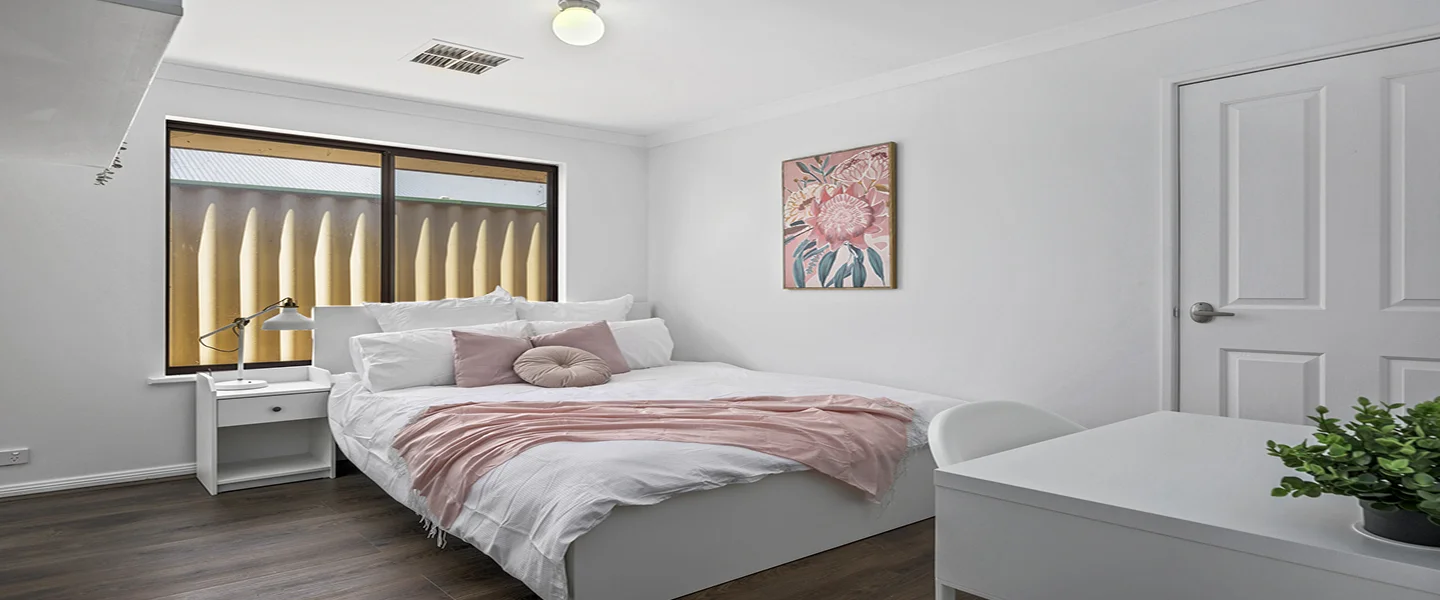
In the world of Australian property, there is a certain romanticism around the "DIY renovator." We’ve all seen the shows where a couple buys a run-down house, spends a few weekends with a sledgehammer and a paintbrush, and walks away with a massive profit. It looks easy, it looks rewarding, and most importantly, it looks like a way to save money.
But when it comes to coliving, the "do-it-yourself" approach is often a siren song that leads investors straight onto the rocks.
Converting a standard 4-bedroom house into a high-performing 5 or 6-bedroom cash flow engine is not a standard renovation. It is a technical, regulatory, and architectural exercise. At Elevate Coliving, we’ve seen what happens when investors try to cut corners or manage a complex conversion from a distance. The results are almost always the same: cost blowouts, compliance nightmares, and a property that fails to attract high-quality occupants.
If you are looking to turn a negatively geared property into a weekly income stream of $1,950 to $2,200, you need to understand the hidden risks of going it alone.
The biggest risk of a DIY renovation is what you don’t know. Many investors assume that if they hire a standard builder, the property will be "fine." However, coliving properties in Perth and Melbourne are subject to specific building codes, fire safety regulations, and council requirements that a standard residential builder may never have encountered.
In a coliving environment, the safety requirements are significantly higher than in a standard family home. You aren't just looking at a few battery-operated smoke detectors.
If a DIY renovator misses even one of these requirements, the consequences are severe. Not only could you face massive council fines, but your insurance policy could be rendered completely void. If the worst should happen, you are personally liable. Elevate Coliving takes a "compliance-first" approach, ensuring every conversion meets or exceeds the necessary safety standards from day one.
There are strict rules regarding ceiling heights, natural light, ventilation, and room sizes. A DIY renovator might try to squeeze a sixth bedroom into a space that doesn't technically meet the code for "habitable space." This might save you money in the short term, but it creates a "ticking time bomb" for when you eventually try to sell the property or during a council inspection.
A common DIY mistake is thinking that coliving is just about "adding more bedrooms." We often see properties where an extra room has been carved out of a living area, but the resulting floor plan is awkward, dark, and lacks privacy.
At Elevate Coliving, we don't just add rooms; we engineer for cash flow.
Residents or tenants in 2025 are looking for a sanctuary, not a dormitory. If you simply put up a stud wall with no acoustic insulation, your residents or tenants will hear every footstep, every phone call, and every television in the house. This leads to "housemate friction" and high turnover.
Our professional conversions include:
A 6-bedroom house needs a kitchen and laundry that can handle 6 adults. A DIY conversion often neglects the "load" on the common areas. If there is a queue for the stove or the washing machine every morning, people will move out.
For investors based in Sydney or Melbourne looking to invest in Perth (or vice versa), managing a renovation is a logistical nightmare. This is the "Distance Gap."
Finding reliable tradespeople in the current market is difficult. When you are a "one-off" DIY renovator, you are at the bottom of a builder's priority list. This leads to delays, "no-shows," and the temptation for trades to cut corners because they know you aren't there to inspect the work.
Every week your renovation drags on is a week of lost income. In an Elevate Coliving property, a one-month delay doesn't just cost you the interest on your loan; it costs you roughly $8,000 in lost rent ($2,000/week x 4).
Elevate Coliving has established relationships with those who understand the coliving "blueprint." We provide the oversight and the systems to ensure the project stays on track, protecting your capital from the "renovation bleed."
The goal of coliving is to provide high-quality housing in a market where rentals are out of reach. To do this, your property needs to look like a home people want to live in, not a budget rental.
DIY renovations often suffer from "mismatched aesthetics." Cheap fixtures, dated colour palettes, and "leftover" furniture from the investor's own home create a clinical or "cheap" vibe.
Elevate Coliving focuses on boutique delivery. We select finishes that are durable but look high-end. We understand the psychology of the modern resident: they want stone benchtops, modern tapware, and a cohesive design. When a house feels like a premium product, you can justify the $350-$450 per week room rates and, more importantly, you attract "Market Hero" residents or tenants—working professionals who treat the home with respect.
The "Too Good to be True" barrier usually exists because investors have seen people fail at property. They’ve seen the "money pits" and the "renovation nightmares."
We remove the guesswork by offering a "done-for-you" end-to-end service.
When you add up the risks, the potential for insurance denial, the lost rent due to delays, the lower room rates due to poor design, and the high turnover from "housemate friction", the "savings" of a DIY renovation quickly evaporate.
An Elevate Coliving conversion is an investment in certainty. We turn a standard house into a business asset that generates $100k+ in gross annual income. We protect your capital by doing it right the first time, allowing you to bridge the "Distance Gap" and build a portfolio that truly pays for your life.
Property investment is about risk management. If you are serious about escaping the negative gearing trap and addressing the rental crisis, you need a partner who understands the complexities of the modern market.
Don't let your "Passive Income" dream turn into a "Renovation Nightmare." Let Elevate Coliving provide the expertise, the systems, and the boutique delivery that your capital deserves.
Information is one thing, but a personalised strategy is another. If you're tired of the old model and ready to explore a proven pathway to financial freedom, the next step is a simple conversation.

Or call us directly on 1300 265 484

.svg)
.svg)

.svg)


The information on this website is general in nature and does not constitute credit, financial, or investment advice. Elevate Coliving is not a credit provider and does not provide credit services. All prices and financial figures are in Australian Dollars (AUD). Past examples and case studies are provided for illustrative purposes only and are not a reliable indicator of future investment performance or results. We recommend seeking independent professional advice before making any financial or investment decisions.
Privacy Policy | Terms of Use | © Elevate Coliving Pty Ltd. All rights reserved. | ABN: 57 634 364 935



